Shipyard Workers, Asbestos Exposure, and Mesothelioma Risk
Civilian and Navy shipyard workers were among the most heavily asbestos-exposed groups in American industry, for a simple reason: for most of the 20th century, the material that insulated ships’ boilers, steam lines, and engines — and that fireproofed their bulkheads — was asbestos. Building, repairing, and refitting a ship meant cutting, fitting, tearing out, and spraying asbestos products in enclosed spaces, and the epidemiology shows the result: a US Coast Guard shipyard cohort followed for five decades recorded a mesothelioma death rate more than five times the general population’s (Occup Environ Med). If you or a parent worked in a shipyard, the exposure was real even if it never felt remarkable at the time — and the rules of this disease mean newly diagnosed patients today are often tracing it back to yards that closed decades ago.
Where the Asbestos Was
A mid-century ship was an asbestos container with a crew. Insulation and lagging wrapped boilers, steam pipes, turbines, and engines; gaskets and packing sealed every joint; fireproofing coated bulkheads; asbestos appeared in deck materials, brakes, cables, and adhesives. Reviews of shipbuilding health record that the trade exposed workers not only to the products but to the constant churn of repair — stripping old insulation in confined compartments is among the most fiber-releasing tasks industrial hygiene knows (Ulster Med J). VA’s own materials list shipyard work among the occupations where service members and civilian workers encountered asbestos (VA Public Health).
The Trades Hit Hardest
Exposure tracked the work, not the uniform:
- Insulators and laggers applied and stripped asbestos insulation directly, often with the highest fiber levels on the yard
- Pipefitters and steamfitters cut, joined, and unwrapped insulated pipe runs
- Boilermakers and engine-room mechanics worked in the densest lagging environments aboard
- Electricians, welders, and shipwrights worked alongside disturbed insulation, often in the same compartments
- Navy personnel below decks — enginemen, machinist’s mates, boiler tenders — lived and slept a few feet from vibrating, deteriorating insulation, and a study of US Navy veterans found their asbestos-related cancer risk rose with the length of shipboard service (Int J Environ Res Public Health)
The exposure did not stay at the yard. A classic American Journal of Public Health study documented asbestos disease in the family members of shipyard workers — fiber carried home on clothing and hair (Am J Public Health) — which is how some mesothelioma patients who never set foot in a yard still trace the disease to one.
What the Studies Show
The US Coast Guard shipyard cohort is the cleanest American example: of 4,702 civilian workers employed between 1950 and 1964 and followed through 2001, mortality from mesothelioma ran more than five times expected (SMR 5.07), along with excess lung cancer and respiratory cancers (Occup Environ Med). It is one study of one yard, but it points the same direction as the international literature: a 2015 review in the European Respiratory Review describes mesothelioma as a man-made epidemic of asbestos-using industries, with shipbuilding among the defining exposures (Eur Respir Rev). NCI states the underlying mechanism plainly — exposure to asbestos causes most mesotheliomas (NCI).
Latency: Why Today’s Patients Trace Back Decades
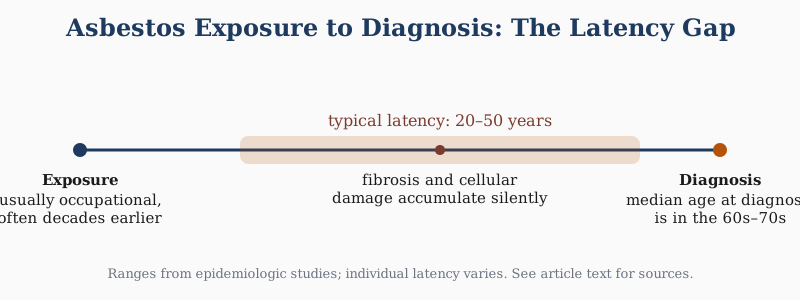
Mesothelioma almost never follows exposure quickly. The usual interval between first asbestos exposure and diagnosis is 20 to 50 years, which is why the disease is diagnosed mostly in people in their 60s and 70s (NCI). For shipyard families this produces a strange arithmetic: a teenager who swept a yard’s shops in the 1960s can meet that exposure again, for the first time, in a pulmonologist’s office in the 2010s.
Health Monitoring Today
Shipyards still operate, and asbestos remains regulated in them: OSHA’s shipyard employment standard sets exposure limits, required work practices, and medical surveillance programs for workers exposed at or above the permissible limit for 30 or more days a year (eCFR, 29 C.F.R. § 1915.1001). For workers from the historical fleet — retired or long moved on — the practical step is making sure your doctor knows the exposure history, and that new breathlessness or chest symptoms get evaluated rather than attributed to age.
Compensation Routes
Several routes can exist for the same person, and they do not cancel each other out:
- VA disability benefits for veterans whose disease connects to service — mesothelioma generally qualifies for a 100 percent rating once service connection is granted; see VA disability for mesothelioma
- Lawsuits and asbestos trust claims against the companies that supplied the products, open to veterans and civilians alike — the legal and compensation guide maps both, and what families can file after a death covers the situation when the exposed worker has already died
- State workers’ compensation for civilian yard employees, where rules and windows vary by state
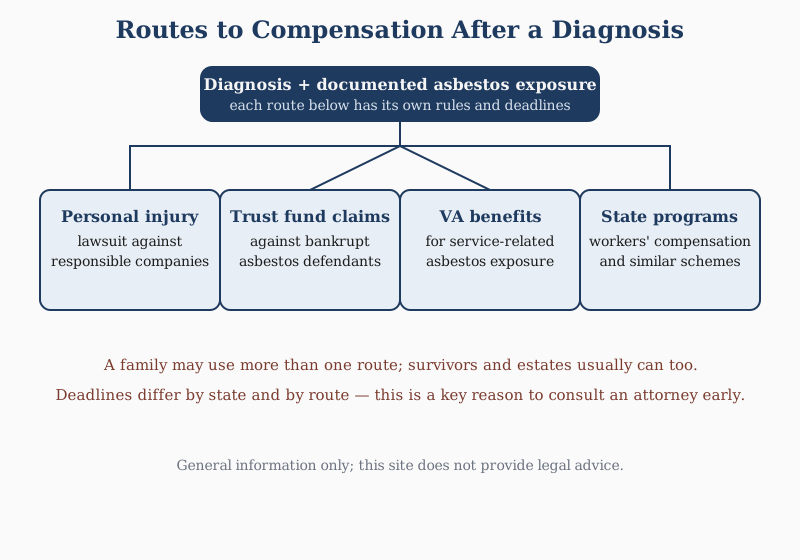
Which route applies, and what the deadlines are, depends on the state and the person’s work history — our legal resources page explains what to prepare before a consultation, and occupational versus environmental exposure puts shipyard exposure in the broader pattern of how mesothelioma happens.
References
- Occupational and Environmental Medicine — Mortality among shipyard Coast Guard workers: US Coast Guard shipyard cohort, 1950–2001; mesothelioma SMR 5.07 (95% CI 1.85–11.03).
- American Journal of Public Health — Asbestos disease in family contacts of shipyard workers: household exposure from fibers carried home.
- International Journal of Environmental Research and Public Health — Sailors and the risk of asbestos-related cancer: shipboard service duration and asbestos cancer risk in US Navy veterans.
- Ulster Medical Journal — Asbestos and ship-building: fatal consequences: the history of asbestos use in shipbuilding and repair.
- European Respiratory Review — Malignant pleural mesothelioma: history, controversy and future of a manmade epidemic: the epidemiology of the asbestos epidemic and typical latency.
- National Cancer Institute — Asbestos Exposure and Cancer Risk: asbestos causes most mesotheliomas; latency of 20–50 years.
- eCFR — 29 C.F.R. § 1915.1001: OSHA’s asbestos standard for shipyard employment, including exposure limits and medical surveillance.
- VA Public Health — Asbestos: VA’s listing of shipyard work among asbestos-exposure occupations.