Understanding Mesothelioma Staging and Prognosis: What Your Diagnosis Means
When you receive a mesothelioma diagnosis, one of the first questions you’ll have is: “What stage is it?” Understanding staging is crucial because it determines treatment options, predicts outcomes, and helps you and your medical team make informed decisions about your care.
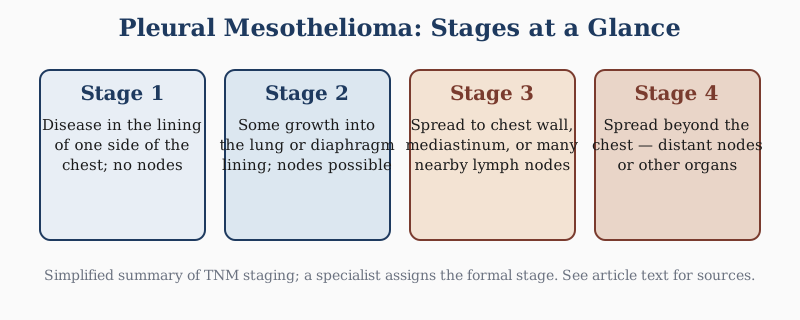
This comprehensive guide explains mesothelioma staging systems, prognostic factors, survival statistics, and most importantly, what these mean for you personally.
One practical way to think about staging is as part of a sequence rather than a single answer. Symptoms lead to imaging, imaging leads to tissue sampling, pathology confirms the diagnosis, and staging then helps shape treatment or supportive-care planning. That sequence matters because not every test is ordered for the same reason.
Older mesothelioma literature can still help explain the logic behind staging and prognosis discussions, but much of it predates modern imaging, pathology review, and newer treatment options. It is useful background, not a substitute for case-specific advice from an experienced mesothelioma team.
Why Staging Matters
Staging serves several critical purposes:
- Guides Treatment Selection: Determines whether aggressive surgery is appropriate or if systemic therapy is the better option
- Predicts Prognosis: Provides statistical information about likely outcomes
- Standardizes Communication: Ensures all healthcare providers understand disease extent
- Clinical Trial Eligibility: Many trials have specific staging requirements
- Research and Data Collection: Enables comparison of outcomes across studies
It also helps to separate the purpose of each step. A scan may be mainly for mapping disease extent, a procedure may be mainly for diagnosis or symptom relief, and a stage label may narrow the treatment conversation without deciding it by itself.
The International Mesothelioma Interest Group (IMIG) Staging System
The IMIG staging system, introduced in 1995, is the most widely used classification for malignant pleural mesothelioma. It’s based on the TNM system (Chest; for the current eighth-edition TNM, see Transl Lung Cancer Res):
- T (Tumor): Extent of primary tumor
- N (Nodes): Lymph node involvement
- M (Metastasis): Distant spread
T (Tumor) Categories
T1: Limited to Ipsilateral Pleura
T1a:
- Tumor limited to parietal pleura (chest wall lining)
- Includes mediastinal and diaphragmatic pleura
- NO visceral pleura (lung lining) involvement
T1b:
- Involves parietal pleura (mediastinal, diaphragmatic)
- Scattered foci also involving visceral pleura
T2: Advanced Local Involvement Tumor involving all ipsilateral pleural surfaces with at least one of:
- Muscle of the diaphragm involved
- Confluent tumour on the visceral pleura (including the fissures)
- Extension into lung parenchyma
T3: Locally Advanced, Technically Resectable Describes locally advanced tumor but potentially resectable with at least one of:
- Endothoracic fascia involvement
- Extension into mediastinal fat
- Solitary focus into chest wall soft tissue
- Non-transmural pericardial involvement
T4: Locally Advanced, Unresectable Indicates unresectable tumor with:
- Diffuse chest wall involvement with or without rib destruction
- Direct transdiaphragmatic extension to peritoneum
- Direct extension to contralateral pleura
- Extension to mediastinal organs
- Extension to spine
- Extension through pericardium with involvement of myocardium
N (Lymph Node) Categories
N0: No lymph node involvement
N1: Ipsilateral bronchopulmonary or hilar nodes
N2:
- Ipsilateral mediastinal nodes
- Subcarinal nodes
- Internal mammary nodes
N3:
- Contralateral mediastinal nodes
- Contralateral internal mammary nodes
- Ipsilateral or contralateral supraclavicular nodes
- Scalene nodes
M (Metastasis) Categories
M0: No distant metastasis
M1: Distant metastatic spread confirmed
Other Staging Systems You May Still Encounter
Older literature may refer to the Butchart system, which grouped disease more broadly by anatomic spread. It is helpful for reading older survival studies, but modern pleural mesothelioma care is usually discussed with TNM-based staging instead.
You may also see references to the Brigham/Sugarbaker approach in surgical discussions. That framework was designed mainly around operative decision-making and resectability, so it is most useful when specialist teams are deciding whether aggressive surgery is realistic.
How Staging Fits Into the Workup
Staging is important, but it is only one part of clinical decision-making. Doctors usually weigh stage alongside tumor distribution, histology, symptoms, and overall health when discussing surgery, systemic therapy, radiotherapy, or symptom-focused procedures.
Two practical points are easy to miss:
- Imaging that helps estimate disease extent does not always settle diagnosis on its own
- A procedure may be performed to relieve symptoms, clarify pathology, or guide planning rather than to change prognosis directly
Doctors may also use PET imaging, thoracoscopy, or selective nodal sampling to refine staging when scans leave important questions unanswered. Those tools can improve planning, but they still have to be interpreted alongside pathology and the patient’s overall condition.
The Four Clinical Stages
Combining T, N, and M categories creates four clinical stages (NCI):
Stage I: Localized Disease
Stage IA: T1a N0 M0
- Tumor limited to parietal pleura only
- No lymph node involvement
- No metastases
- Best prognosis
- Surgical candidates
Stage IB: T1b N0 M0
- Scattered visceral pleural involvement
- No nodes or metastases
- Still potentially curable with surgery
Treatment Approach:
- Aggressive surgical resection (EPP or P/D)
- Adjuvant chemotherapy
- Adjuvant radiation therapy
- Clinical trials for novel therapies
Prognosis:
- Median survival: 21-30 months with multimodal therapy
- 5-year survival: 16-25% with aggressive treatment
- Best outcomes with epithelioid histology
(Treatment selection by stage follows the NCI physician data summary.)
Stage II: Locally Advanced
Stage II: T2 N0 M0
- Diaphragmatic muscle involvement
- Confluent visceral pleural tumor
- Extension into lung parenchyma
- No nodal or distant spread
Treatment Approach:
- Still potentially resectable
- Multimodal therapy recommended
- Surgery + chemotherapy + radiation
- Consider clinical trials
Prognosis:
- Median survival: 14-19 months with treatment
- 2-year survival: 30-35%
- Outcomes depend heavily on achieving complete resection
Stage III: Advanced Locoregional Disease
Stage IIIA: T1-T2 N1-N2 M0
Stage IIIB: T3 N0-N2 M0
- Chest wall involvement
- Mediastinal extension
- Regional lymph node spread
- Technically resectable in some cases
Treatment Approach:
- Surgery controversial and patient-specific
- Chemotherapy primary treatment
- Radiation for symptom control
- Clinical trials important option
- Palliative care integration
Prognosis:
- Median survival: 10-16 months with treatment
- Surgery benefit unclear
- Chemotherapy response rates: 30-45%
Stage IV: Metastatic Disease
Stage IV: T4 or N3 or M1
- Extensive local invasion OR
- Distant nodal involvement OR
- Distant metastases
Common Metastatic Sites:
- Contralateral lung/pleura
- Liver
- Bone
- Adrenal glands
- Brain (less common)
- Peritoneum
Treatment Approach:
- Surgery not beneficial
- Systemic chemotherapy
- Immunotherapy (newer option) — in the phase 3 CheckMate 743 trial, first-line nivolumab plus ipilimumab improved overall survival versus platinum–pemetrexed chemotherapy, with the largest benefit in non-epithelioid tumors (Lancet)
- Palliative radiation for symptoms
- Focus on quality of life
- Hospice when appropriate
Prognosis:
- Median survival: 6-12 months with treatment
- Focus shifts to symptom management
- Some patients respond well to immunotherapy
- Individual variation significant
Beyond Staging: Other Prognostic Factors
Histological Subtype
Epithelioid Mesothelioma (50-60% of cases):
- Best prognosis
- Median survival: 12-24 months with treatment
- Better response to therapy
- More amenable to surgery
Sarcomatoid Mesothelioma (10-20% of cases):
- Worst prognosis
- Median survival: 4-8 months
- Poor treatment response
- Surgery rarely beneficial
- Often diagnosed at advanced stage
Biphasic/Mixed Mesothelioma (20-35% of cases):
- Intermediate prognosis
- Outcome depends on epithelioid vs. sarcomatoid ratio
- Higher epithelioid percentage → better prognosis
- Median survival: 8-14 months with treatment
Performance Status
Performance status measures your overall function and predicts treatment tolerance. The ECOG scale below is the standard five-point version (Am J Clin Oncol):
ECOG Performance Status:
- 0: Fully active, no restrictions
- 1: Restricted in strenuous activity but ambulatory
- 2: Ambulatory, capable of self-care, up >50% of waking hours
- 3: Limited self-care, in bed/chair >50% of waking hours
- 4: Completely disabled, no self-care, bed/chair bound
Impact on Prognosis:
- ECOG 0-1: Best candidates for aggressive treatment
- ECOG 2: Selected treatments possible
- ECOG 3-4: Palliative care focus
Age and General Health
Age Factor:
- Younger patients (under 65) generally have better outcomes
- Older patients may not tolerate aggressive treatments
- Age alone shouldn’t exclude treatment options
- Biological age more important than chronological age
Comorbidities:
- Cardiovascular disease limits surgical options
- COPD/smoking history affects lung function
- Diabetes impacts healing and infection risk
- Overall fitness crucial for surgery
Laboratory Markers
Several blood markers predict prognosis:
Elevated Levels Associated with Worse Prognosis:
- High LDH (lactate dehydrogenase)
- Elevated white blood cell count
- Thrombocytosis (high platelet count)
- Low hemoglobin (anemia)
- Elevated C-reactive protein (CRP)
Emerging Biomarkers:
- Mesothelin levels
- Osteopontin
- Fibulin-3
- MicroRNA panels
Tumor Volume and Burden
- Larger tumor volume → worse prognosis
- Bilateral pleural involvement → poor prognosis
- Pleural effusion requiring drainage → worse outcomes
In some specialist settings, CT-based volume measurement and 3-D reconstruction can also help track tumor burden over time. These tools are not the same thing as staging, but they can add context when teams are assessing progression or response.
Symptom Pattern and Tumor Location
The anatomical site of disease can shape both symptoms and care planning:
- Lung invasion may cause more diffuse visceral pain
- Chest wall invasion may cause more localized somatic pain
- Intercostal nerve or vertebral involvement may produce neuropathic pain
This does not replace formal staging, but it helps explain why symptom control plans can differ even among patients with superficially similar diagnoses.
Completeness of Resection
For surgical patients:
Macroscopic Complete Resection (MCR):
- All visible tumor removed
- Best surgical outcome
- Median survival: 19-24 months
Incomplete Resection:
- Gross residual disease remains
- Median survival: 10-12 months
- Surgery benefit questionable
Prognostic Scoring Systems
Two prognostic models are widely cited in mesothelioma — the CALGB score from the Cancer and Leukemia Group B (Chest) and the EORTC score from the European Organization for Research and Treatment of Cancer (J Clin Oncol).
CALGB (Cancer and Leukemia Group B) Score
Assigns points for poor prognostic factors:
- Non-epithelioid histology
- Chest pain
- Poor performance status
- Platelet count >400,000
- Age >75
- Low hemoglobin
- High white blood cell count
Risk Groups:
- Low risk: Median survival 13-15 months
- Intermediate risk: 8-10 months
- High risk: 5-7 months
EORTC (European Organization for Research and Treatment of Cancer) Score
Similar prognostic model using:
- Performance status
- Histological subtype
- White blood cell count
- Gender
- Pleural vs. peritoneal mesothelioma
Understanding Survival Statistics
What Statistics Mean (and Don’t Mean)
Median Survival:
- Half of patients live longer, half live shorter
- Individual outcomes vary widely
- Improving over time with better treatments
Limitations:
- Based on historical data (patients diagnosed years ago)
- New treatments improving outcomes
- Statistics are populations, not individuals
- You are not a statistic
Factors Improving Survival
Treatment at Specialized Centers:
- High-volume mesothelioma programs achieve better outcomes
- Experienced surgical teams reduce complications
- Multidisciplinary care improves coordination
- Access to clinical trials
Aggressive Multimodal Therapy:
- Surgery + chemotherapy + radiation
- Long-term survivors almost always had multimodal treatment
- Complete resection crucial for surgical benefit
Favorable Tumor Biology:
- Epithelioid histology
- Early-stage diagnosis
- Good response to initial therapy
Long-Term Survivors: What We’ve Learned
While mesothelioma is aggressive, long-term survivors exist and teach us valuable lessons:
Characteristics of 5+ Year Survivors:
- Early-stage at diagnosis (Stage I-II)
- Epithelioid histology
- Complete surgical resection achieved
- Good performance status
- Multimodal therapy completed
- Treatment at specialized centers
- Positive attitude and strong support
Emerging Hope:
- Immunotherapy showing durable responses
- Better surgical techniques
- Improved radiation delivery
- Novel targeted therapies in trials
Questions to Ask Your Doctor
When discussing staging and prognosis:
- What is my exact TNM staging?
- What histological subtype do I have?
- Am I a candidate for surgery?
- What’s my ECOG performance status?
- What treatment approach do you recommend for my stage?
- What are my realistic survival expectations?
- Am I eligible for clinical trials?
- How will we monitor disease progression?
- When should we consider palliative care?
- What factors might change my prognosis?
- Is this test or procedure mainly for diagnosis, staging, treatment planning, or symptom relief?
- Should my case be reviewed at a specialist mesothelioma center?
Living Beyond the Statistics
Remember that staging provides a framework, not a ceiling. Many patients exceed expectations through:
- Aggressive treatment at specialized centers
- Participation in clinical trials
- Excellent supportive care
- Strong social support networks
- Positive mental attitude
- Complementary therapies for quality of life
Conclusion
Understanding mesothelioma staging empowers you to:
- Make informed treatment decisions
- Set realistic expectations
- Choose appropriate clinical trials
- Plan for the future
- Advocate for optimal care
While staging provides important information, remember that you’re an individual, not a statistic. Work closely with your mesothelioma specialist team, consider all options including clinical trials, and maintain hope. Medical advances continue, and tomorrow’s treatments may offer options not available today.
Most Important Takeaway: Early-stage diagnosis offers the best outcomes. If you have asbestos exposure history and any respiratory symptoms, seek evaluation by a mesothelioma specialist immediately. Early detection saves lives.
References
- Chest — The IMIG proposal for a new international TNM staging system for pleural mesothelioma (1995): the original IMIG TNM system the T, N, and M descriptions follow.
- Translational Lung Cancer Research — The eighth TNM classification for malignant pleural mesothelioma: how the TNM descriptors and stage groupings were revised in the current edition.
- National Cancer Institute — Mesothelioma Stages and Malignant Mesothelioma Treatment (PDQ): official stage groupings and treatment selection by stage.
- Lancet — First-line nivolumab plus ipilimumab in unresectable malignant pleural mesothelioma (CheckMate 743): the phase 3 immunotherapy survival result noted for advanced disease.
- American Journal of Clinical Oncology — Toxicity and response criteria of the Eastern Cooperative Oncology Group (Oken, 1982): the ECOG performance status scale.
- Chest — Factors predictive of survival among 337 patients with mesothelioma (CALGB): the CALGB prognostic score and its risk groups.
- Journal of Clinical Oncology — Prognostic factors in patients with pleural mesothelioma (EORTC): the EORTC prognostic model.